
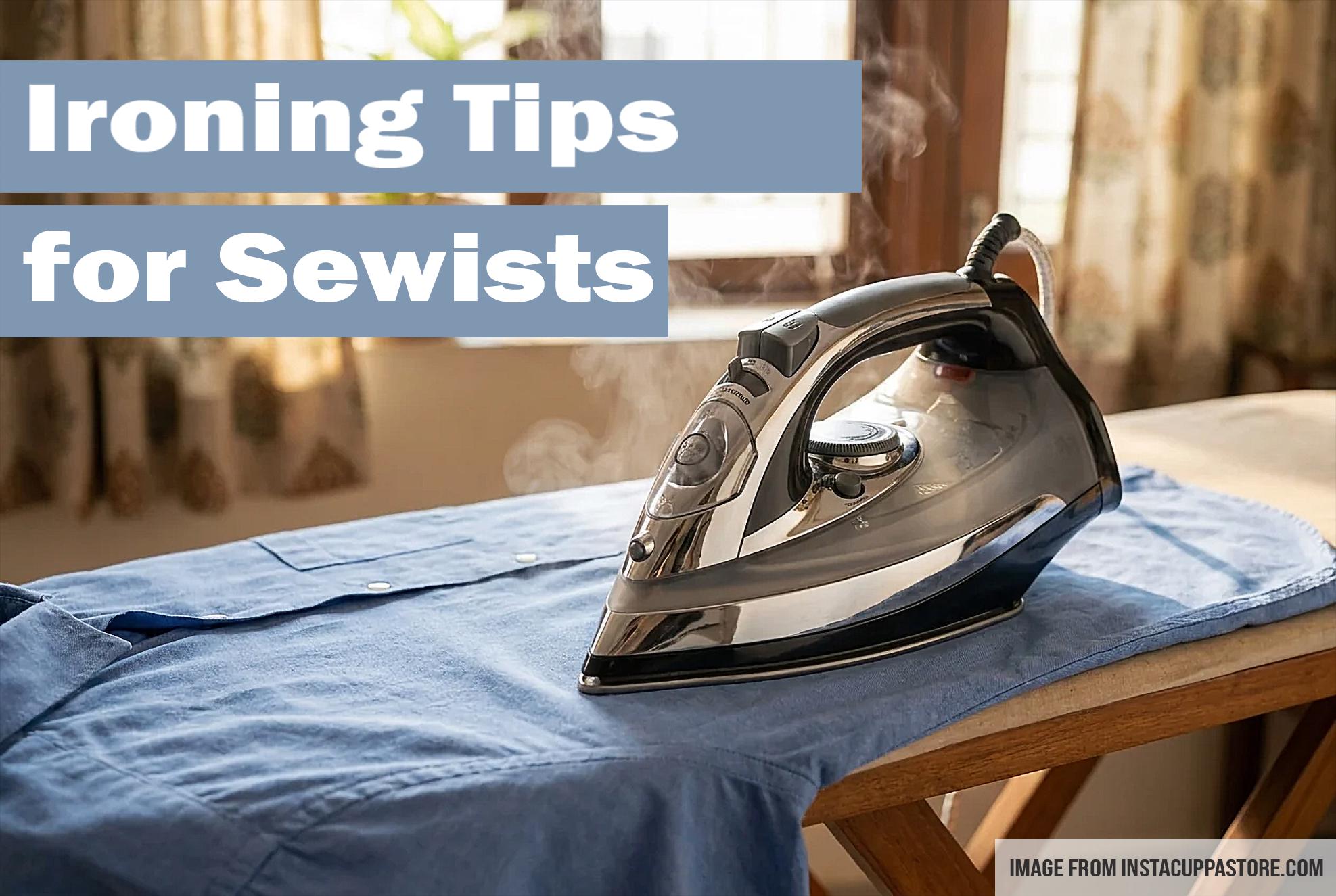
An iron might seem like one of the simplest tools in a sewing room, but it can make a huge difference to the final result of a garment. Good pressing can help seams lie flat, shape darts and curves, and give handmade garments a much more professional finish.At the same time, an iron reaches extremely high temperatures and uses electricity and, in many cases, hot steam. Using it incorrectly can damage fabric, leave marks, or even cause serious burns.Here are some simple habits that can help you get better results while keeping your iron in good condition.
1. Always Check the Fabric Before Choosing the Temperature
One of the easiest ways to damage fabric is using too much heat.Different fabrics react very differently to temperature. Natural fibers such as cotton and linen can generally tolerate more heat, while delicate fabrics such as silk, synthetic fibers and some blends may require much lower temperatures.When you are unsure, start with a lower temperature and increase it gradually.It is also a good idea to test the iron on a small scrap of the same fabric before pressing the actual garment. This is especially important when working with unfamiliar fabrics.
A simple rule: you can always increase the temperature, but you cannot undo a melted or scorched fabric.
2. Use a Pressing Cloth for Delicate Fabrics
A pressing cloth is a simple piece of cotton or another suitable fabric placed between the iron and your garment.It can protect the fabric from:
- Shiny marks
- Scorching
- Direct contact with the hot soleplate
- Water or steam marks
- Accidental damage from excessive heat
A pressing cloth is particularly useful when working with dark fabrics, wool, delicate materials and fabrics that develop a shine easily.Keep one next to your ironing board. It takes only a few seconds to use and can save an entire garment from an unwanted mark.
3. Don't Forget the Steam
Steam is extremely useful in garment sewing.It can help relax fabric fibers, flatten seams and make certain shaping techniques easier. It is particularly helpful when pressing seams, darts and curved areas.However, steam should be used carefully. Some fabrics can be damaged or stained by moisture, and very hot steam can cause severe burns.Never place your hand directly in front of the steam holes to check whether the steam is working.If you need to manipulate the fabric while steaming, use appropriate pressing tools rather than your fingers.
4. Keep the Soleplate Clean
The bottom of your iron comes into direct contact with your fabric, so keeping it clean is important.Residue from interfacing, fusible web, synthetic fibers or fabric finishes can stick to the soleplate. If this residue is transferred to another garment, it can leave stains or even melt onto the fabric.Make it a habit to check the soleplate regularly.If you notice residue, allow the iron to cool and clean it according to the manufacturer's instructions. Avoid using abrasive materials that could scratch the soleplate.A scratched or damaged soleplate can drag across fabric instead of gliding smoothly.
5. Take Care of the Water Tank
If your iron has a steam function, the water you put into it matters.Mineral deposits from hard water can accumulate inside the iron and eventually clog the steam holes or leave mineral residue on your fabric.Follow the manufacturer's instructions regarding the type of water to use. Some irons are designed for tap water, while others may recommend filtered or demineralized water.It is also important to empty the water tank after use if the manufacturer recommends doing so.Leaving water inside the iron for long periods can contribute to mineral buildup and other problems.
6. Clean the Steam Holes Occasionally
If the steam coming from your iron becomes uneven or you notice white particles appearing on your fabric, mineral deposits may have accumulated inside the steam system.Don't simply scrape the holes with sharp metal objects. This can damage the soleplate.Instead, use the cleaning or descaling procedure recommended by the manufacturer.Regular maintenance is much easier than trying to rescue an iron after the steam system has become heavily clogged.
7. Be Careful With Fusible Interfacing
Anyone who works with sewing patterns and garment construction will eventually work with fusible interfacing.And fusible interfacing can be a surprisingly effective way to glue your iron to your sewing project.Always check the manufacturer's instructions for the correct temperature, pressing time and use of steam.If adhesive gets onto the soleplate, stop before pressing another piece of fabric. Otherwise, the adhesive can transfer to the next garment.Using a pressing cloth can also help protect your iron when working with fusible materials.
8. Press, Don't Iron
There is an important difference between ironing and pressing.When ironing, we usually move the iron back and forth across the fabric.When pressing during garment construction, we often place the iron onto a specific area, apply heat and pressure, then lift it and move to the next area.For many sewing techniques, pressing rather than aggressively moving the iron back and forth gives better results.This is particularly useful for:
- Seams
- Darts
- Pleats
- Facings
- Collars
- Waistbands
- Curved seams
The right pressing technique can make pattern pieces behave very differently.
9. Use the Right Pressing Tools
Your iron is only one part of a good pressing setup.Depending on what you are sewing, useful tools can include a tailor's ham, sleeve board, pressing cloth, seam roll and a small pressing mat.Curved areas such as bust darts, princess seams and collars can be much easier to shape when you have a pressing tool that supports the curve underneath the fabric.You don't necessarily need every pressing tool available. Start with the tools that match the types of garments you sew most often.
10. Never Leave a Hot Iron Unattended
This is probably the most important rule.Never leave a hot iron unattended, even for a short time.Keep the iron on a stable, heat-resistant surface and make sure the power cord cannot be accidentally pulled.If you need to leave your sewing room, turn the iron off and unplug it.Do not rely entirely on an automatic shut-off function. It is a useful safety feature, but it should not replace good habits.
11. Watch Out for the Cord
The power cord is easy to overlook in a busy sewing room.Keep it away from the hot soleplate and make sure it does not hang where it can be pulled accidentally.When storing the iron, avoid wrapping the cord tightly around the hot appliance. Allow the iron to cool completely first and store it according to the manufacturer's recommendations.A damaged power cord should not be ignored. If you notice exposed wires, cracking or other damage, stop using the iron until it has been properly repaired or replaced.
12. Let the Iron Cool Before Storing It
It sounds obvious, but sewing projects can be distracting.After finishing your pressing, turn the iron off and place it somewhere safe to cool down. Don't immediately store it while the soleplate is still hot.Make sure the iron is completely cool before wrapping the cord or putting it away.This protects both the iron and the surfaces around it.
13. A Few Things You Should Never Do
There are a few habits worth avoiding:
-Never touch the soleplate to check how hot it is.
-Never put your hand directly over the steam holes.
-Never leave the iron unattended while it is switched on.
-Never press directly over unknown plastic, adhesive or synthetic materials without checking their heat resistance.
-Never use a damaged electrical cord or plug.
-Never clean the iron while it is plugged in or still hot.
These precautions may seem obvious, but sewing often involves concentrating on several things at once, which makes simple accidents more likely.
14. Make Pressing Part of the Sewing Process
One of the best habits you can develop as a sewist is to press throughout the construction process instead of waiting until the garment is finished.Press each seam after sewing it. Press darts before moving to the next step. Shape curves as you construct them.Good pressing isn't something you do only at the end.It is part of sewing.A well-drafted pattern and accurate stitching are important, but careful pressing can be the step that brings everything together and makes the finished garment look polished.
👉💌 JOIN OUR EMAIL NEWSLETTER 💌👈
Final Thoughts
Your iron is one of the hardest-working tools in a sewing room, so it deserves a little maintenance and care.Keep the soleplate clean, take care of the water system, use the appropriate temperature for each fabric and don't underestimate the importance of a pressing cloth. Most importantly, treat the iron as a high-temperature electrical appliance, not simply another sewing tool.A few extra seconds spent pressing carefully can improve the appearance of an entire garment. And a few extra seconds spent taking care of your iron can help it remain reliable for years of sewing projects.