
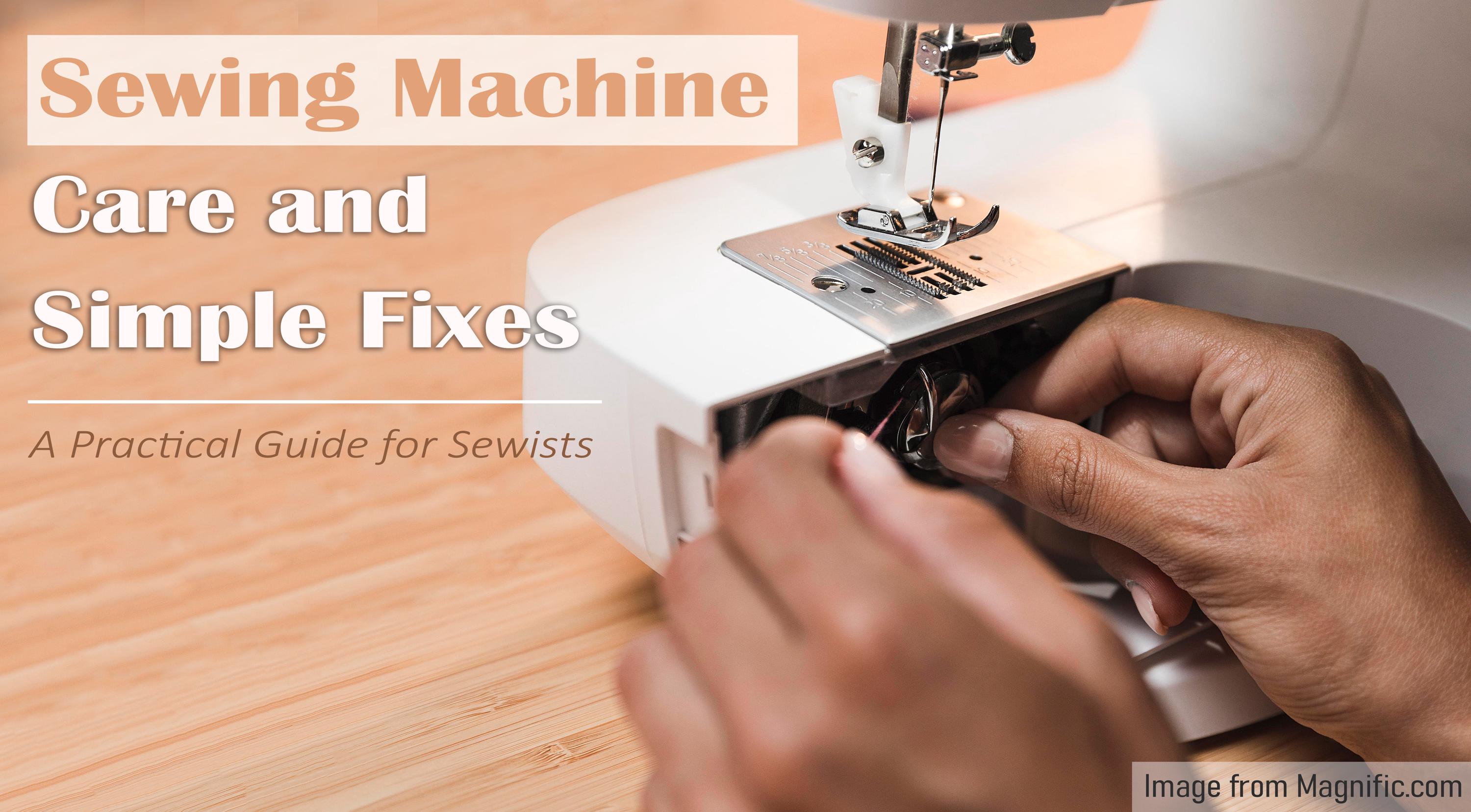
This guide is based on practical sewing experience and general sewing machine maintenance knowledge. It focuses on simple problems that sewists can safely check and address at home or in their sewing studio. For electrical, motor, timing, or internal mechanical problems, professional servicing is recommended.
A sewing machine is one of the most important tools in a sewing room. Whether you use a domestic sewing machine for personal projects or a straight-stitch industrial machine for professional sewing, regular care can make a noticeable difference in how smoothly it works.The good news is that many common sewing machine problems are not serious mechanical failures. Sometimes the machine simply needs a new needle, a thorough cleaning, correct threading, or a little adjustment.Before reaching for the screwdriver, let's go through some of the most common problems and simple things you can check yourself.
First: Turn the Machine Off
Before cleaning, removing the needle, opening the bobbin area, or removing tangled thread, switch the machine off and unplug it from the power source.This is especially important when working around the needle, presser foot, bobbin area, or moving mechanical parts.For any maintenance that goes beyond basic cleaning and adjustments, check the machine's manual first.
1. The Thread Keeps Getting Tangled Under the Fabric
This is one of the most common sewing machine problems, and surprisingly often, the bobbin is not actually the culprit.When a large nest of thread appears underneath the fabric, first check the upper threading.
Make sure:
- The machine is threaded correctly.
- The thread has passed through all the required guides.
- The thread is properly positioned in the tension mechanism.
- The presser foot was raised while threading, if required by your machine.
- The bobbin is inserted in the correct direction.
Remove the tangled thread completely before starting again. Continuing to sew over a thread nest usually makes the problem worse.A quick rethreading of the upper thread can sometimes solve the entire problem.
2. The Machine Is Skipping Stitches
If your machine occasionally makes a stitch and then skips the next one, start with the simplest possibility: the needle.A damaged, bent, blunt, or incorrect needle can cause skipped stitches.
Try:
- Replacing the needle with a new one.
- Making sure it is inserted in the correct direction.
- Checking that it is pushed all the way up into the needle holder.
- Using a needle appropriate for your fabric.
Needle choice matters more than many beginners realize. A lightweight fabric, denim, stretch fabric, and woven medium-weight fabric may all require different needles.If replacing the needle doesn't solve the problem, check the threading and tension before assuming there is a mechanical fault.
3. The Thread Keeps Breaking
Constant thread breakage can have several causes.Start with the easy checks:
- Is the thread correctly threaded?
- Is the needle damaged?
- Is the needle appropriate for the thread and fabric?
- Is the upper tension set appropriately?
- Is the thread catching on something along its path?
- Is the spool positioned correctly?
Sometimes the thread itself is the problem. Very old, weak, or poor-quality thread can break more easily, especially when sewing at higher speeds.Try a different spool of good-quality thread before making complicated adjustments.
4. The Fabric Is Being Pulled or Pushed
If the fabric is being pulled into the needle plate or pushed unevenly while sewing, stop and check the setup.Make sure the presser foot is appropriate for the project and that the feed dogs are functioning normally.Avoid forcing the fabric through the machine. The feed mechanism should move the fabric forward while you guide it gently.If you're sewing very lightweight fabric, a suitable presser foot, stabilizer, or temporary support may help.
5. The Stitches Look Too Loose or Too Tight
Uneven tension can make stitches look messy on either side of the fabric.Before adjusting the tension dramatically, check the basics.Rethread the machine completely and make sure the thread is correctly seated in the tension mechanism.Then test the machine on a scrap of the same fabric.Small tension adjustments may be necessary depending on the fabric, thread, and stitch type, but avoid changing several settings at once. If you change everything simultaneously, it becomes difficult to know what actually solved the problem.
6. The Needle Keeps Breaking
A needle should not regularly break during normal sewing.If it does, stop sewing and check:
- Whether the needle is bent.
- Whether the needle is correctly installed.
- Whether the needle is suitable for the fabric.
- Whether the presser foot is correctly positioned.
- Whether you are pulling the fabric while sewing.
- Whether the needle is hitting the presser foot or needle plate.
Never continue sewing after a needle breaks without checking what caused it.Small pieces of a broken needle can also end up in the bobbin or surrounding area, so inspect the machine carefully.
7. Your Sewing Machine Sounds Different
You know your sewing machine's normal sound better than anyone.If it suddenly starts making unusual clicking, grinding, squeaking, or knocking sounds, don't simply increase the speed and hope it disappears.First, stop the machine and remove the thread and bobbin.Check the bobbin area for:
- Tangled thread
- Lint
- Broken needle pieces
- Fabric fragments
- Dirt or accumulated debris
If the unusual sound continues after basic cleaning and checking, it may be time for professional servicing.A strange noise is often a machine's way of saying, "Please stop sewing for a minute."
8. Cleaning the Bobbin Area
Lint and small pieces of thread naturally accumulate inside a sewing machine.Regularly clean the accessible areas around the bobbin case, feed dogs, and needle plate according to your machine's manual.A small cleaning brush is useful for removing lint from areas that are difficult to reach.Avoid using excessive force or inserting tools into areas that you cannot safely access.For industrial straight-stitch machines, cleaning around the bobbin and feed mechanism is particularly important because they may be used for many hours at high speed.
9. Does Your Machine Need Oil?
This is where domestic and industrial machines can be very different.Some sewing machines are designed to be lubricated by the user, while others require little or no user-applied oil in certain areas.Industrial straight-stitch machines often have specific lubrication requirements, and some models use an automatic oiling system.Never assume that more oil is better.Too much oil can leak onto fabric and create stains, while using the wrong oil can cause problems.
Always check the manufacturer's instructions for:
- Where to apply oil
- What type of oil to use
- How often lubrication is required
If you are unsure, consult the machine manual rather than adding oil randomly.
10. Your Sewing Machine Is Leaving Oil on the Fabric
This is especially frustrating when you're working on a light-colored or expensive fabric.If you notice oil marks:
- Stop sewing.
- Check whether the machine has been over-oiled.
- Clean accessible excess oil according to the machine's instructions.
- Place a scrap piece of fabric under the presser foot.
- Run the machine for a short time and check whether oil is still transferring.
Don't immediately continue sewing your actual garment.A small test piece can save an entire project from an oily surprise.
11. When Should You Replace the Needle?
You don't have to wait until a needle visibly breaks before replacing it.Needles become dull with use, and a dull needle can contribute to skipped stitches, fabric damage, uneven stitches, and unnecessary noise.A good habit is to start a new project with a suitable needle, particularly when working with a different type of fabric.Keep different needle types and sizes organized in your sewing room so you can choose the appropriate one rather than using the same needle for everything.
12. Domestic vs. Industrial Straight-Stitch Machines
Domestic sewing machines and industrial straight-stitch machines are designed for different working environments.A domestic machine is generally designed to handle a variety of stitches and fabrics at moderate speeds. An industrial straight-stitch machine is typically built for repetitive, high-speed straight stitching and often has a stronger motor and heavier-duty construction.Because industrial machines can operate at much higher speeds, regular cleaning, lubrication, and proper adjustment become particularly important.Don't automatically apply maintenance advice from one machine type to another.Your machine's model and manufacturer's instructions should always be your first reference.
When Should You Call a Professional?
Some problems are better left to a sewing machine technician.Consider professional servicing if you notice:
- Persistent grinding or knocking sounds
- Problems with machine timing
- Needle-bar or hook timing issues
- Motor problems
- Electrical faults
- Problems that remain after basic troubleshooting
- Damage to internal mechanical components
- A machine that suddenly stops working
Trying to repair internal mechanical or electrical components without the appropriate knowledge can cause additional damage and may create a safety risk.Sometimes the smartest repair is knowing when to put the screwdriver down.
A Simple Sewing Machine Maintenance Routine
A little regular maintenance is much easier than dealing with a neglected machine later.
After Sewing
Remove lint and loose threads from accessible areas and cover the machine if it will not be used for a while.
Regularly
Clean the bobbin area and check the needle.
Before Important Projects
Test the machine on a scrap of the same fabric.Check the thread, bobbin, needle, stitch quality, and tension before starting the actual garment.
Periodically
Follow the manufacturer's recommended servicing and lubrication schedule.

Final Thoughts
You don't need to be a sewing machine technician to take good care of your machine.Learning how to recognize simple problems can save time, prevent frustration, and sometimes save a sewing project from disaster.Start with the basics: check the needle, rethread the machine, inspect the bobbin, clean away lint, test your tension, and make sure you're using the right thread and needle for your fabric.And remember that good maintenance isn't about fixing everything yourself. Knowing what you can safely fix and when you need professional help is part of becoming a more confident sewist.Your sewing machine does a lot of work for you. Give it a little care, and it will be much happier to keep stitching.