
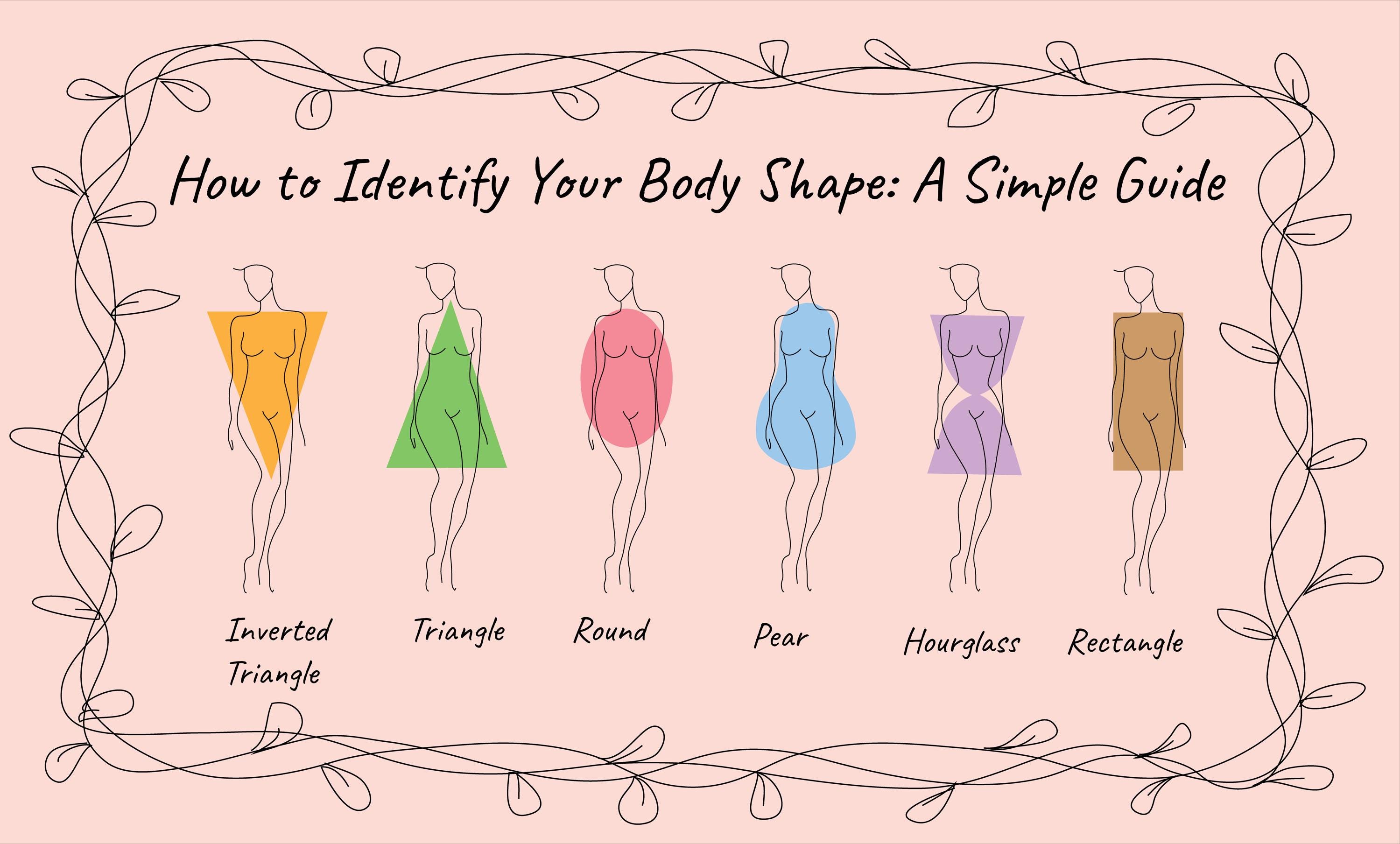
This article is based on commonly accepted principles in apparel design, fashion education, and garment fitting. The content has been independently researched, rewritten, and edited by the author to provide practical guidance for sewing enthusiasts and fashion lovers. Choosing clothes that fit well starts with understanding your body shape. While trends come and go, garments that complement your natural proportions always feel more comfortable and look more balanced. One common misconception is that body shape is determined by weight. In reality, body shape is about proportion, not size. Two people can wear the same clothing size but have completely different body shapes. This guide will help you identify your body shape using a few simple measurements.
How to Measure Yourself To determine your body shape, you'll need a flexible measuring tape. Take four measurements:
- Shoulders: Measure around the widest part of your shoulders.
- Bust: Measure around the fullest part of your bust while keeping the tape level.
- Waist: Measure the narrowest part of your natural waist.
- Hips: Measure around the fullest part of your hips.
Stand naturally and avoid pulling the tape too tightly. Accurate measurements will make identifying your body shape much easier.
⌛Hourglass: The hourglass shape is characterized by balanced shoulders and hips with a clearly defined waist.
Characteristics:
- Bust and hips are similar in width.
- Waist is noticeably smaller.
- Body appears naturally balanced.
Clothing Tips: Garments that define the waist usually complement this shape well. Wrap dresses, fitted blazers, princess seams, and high-waisted skirts are popular choices.
🍐Pear : The pear shape features hips that are wider than the shoulders.
Characteristics:
- Narrow shoulders.
- Defined waist.
- Fuller hips and thighs.
Clothing Tips: Many people choose garments that add visual balance to the upper body. Boat necklines, puff sleeves, structured shoulders, and brighter colors on top can help create proportion.
🍎Apple (Round): The apple body shape typically carries more volume around the midsection.
Characteristics
- Fuller waist.
- Broader upper body.
- Slimmer hips and legs.
Clothing Tips Straight silhouettes, V-necklines, and garments with vertical design lines often create a longer visual appearance.
⬛ Rectangle: The rectangle shape has relatively similar shoulder, waist, and hip measurements.
Characteristics
- Minimal waist definition.
- Balanced proportions.
- Athletic appearance.
Clothing Tips Many styles focus on creating the illusion of curves through belts, peplum tops, gathered waists, or garments with shaping seams.
🔼Triangle Body Shape: The triangle body shape is sometimes confused with the pear body shape because both have hips that are wider than the shoulders. However, some fashion educators and styling systems distinguish the triangle shape as a separate category.
Characteristics:
- Shoulders are noticeably narrower than the hips.
- The hips are the widest part of the body.
- The waist may be defined, but it is not always as pronounced as in a classic pear shape.
- The lower body carries more visual weight than the upper body.
Triangle vs. Pear: What's the Difference?
Although the two body shapes share many similarities, they are not always considered identical. A Pear body shape typically has a well-defined waist with a gentle difference between the shoulders and hips, creating a soft, balanced silhouette. A Triangle body shape usually shows a more dramatic contrast. The shoulders are significantly narrower, while the hips appear much wider, making the lower body the dominant feature. It's worth noting that many fashion books and style guides use the terms Pear and Triangle interchangeably. Others separate them to provide more personalized styling advice. Neither classification is right or wrong. They simply represent different systems of body shape analysis.
Clothing Tips: When dressing a triangle body shape, many people aim to create visual balance by drawing attention upward. Structured shoulders, boat necklines, statement sleeves, light-colored tops, and textured fabrics on the upper body can help balance the proportions. On the lower body, clean silhouettes and darker colors often create a harmonious overall look.
🔽Inverted Triangle: This body shape has broader shoulders than hips.
Characteristics:
- Broad shoulders.
- Narrow hips.
- Athletic upper body.
Clothing Tips: Many outfits emphasize the lower body through fuller skirts, wide-leg trousers, pleats, or lighter colors on the bottom to create visual balance.
⬛Remember: Every Body Is Unique Not everyone fits perfectly into one category. Many people have features from two different body shapes, and that's completely normal. Body shape is simply a helpful guideline for understanding proportions. It should never be seen as a label or a rule about what someone can or cannot wear.
Why Knowing Your Body Shape Matters?
Understanding your body shape can help you:
- Choose sewing patterns with greater confidence.
- Achieve a better garment fit.
- Make fewer fitting adjustments.
- Build a wardrobe that feels comfortable and balanced.
- Shop more efficiently by understanding what silhouettes suit your proportions.
Whether you're sewing your own clothes or choosing ready-to-wear garments, knowing your body shape is one of the most useful tools for creating a wardrobe you'll love.
👉 💌 Join our Email Newsletter 💌 👈
👉 💌 Join our Email Newsletter 💌 👈
References & Further Reading
- Armstrong, H. J. Patternmaking for Fashion Design. Pearson.
- Rasband, J., & Liechty, E. Fabulous Fit: Speed Fitting and Alteration. Fairchild Books.
- Aldrich, W. Metric Pattern Cutting for Women's Wear. Wiley-Blackwell.